
Lennox provides reliable and efficient climate control solutions for homes and businesses, offering a diverse range of air conditioning systems. Understanding your Lennox system’s features, operation, and maintenance is crucial for optimal performance and longevity, ensuring years of comfortable indoor air quality.
Understanding Your Lennox System
Lennox air conditioning systems are engineered for efficiency and comfort, but maximizing their benefits requires a foundational understanding of how they operate. These systems typically comprise an outdoor unit (condenser) and an indoor unit (air handler or furnace). The condenser releases heat, while the indoor unit distributes cooled air throughout your home via ductwork.
Modern Lennox units often feature variable-speed technology, adjusting cooling output to match demand, enhancing comfort and reducing energy consumption. Familiarize yourself with the system’s components, including the thermostat, air filters, and coils. Regular maintenance, like filter replacement and coil cleaning, is vital for sustained performance. Knowing your system’s capacity (measured in BTUs) helps determine its suitability for your home’s size and climate; Proper operation ensures optimal cooling and minimizes potential issues.
Locating the Model and Serial Number
Lennox air conditioner model and serial numbers are essential for identification, parts lookup, and warranty verification; they’re typically found on the unit’s data plate.
Where to Find the Data Plate
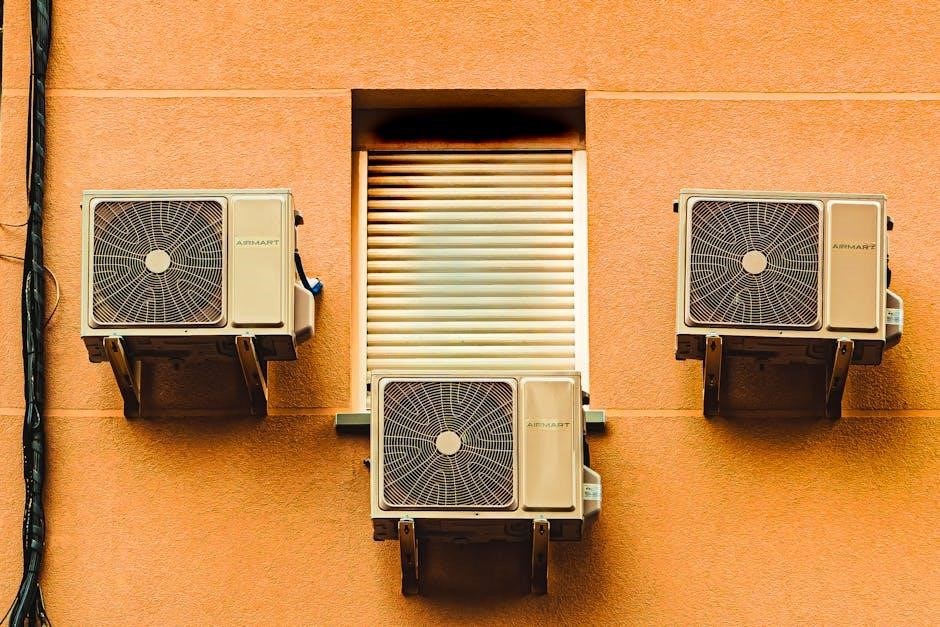
Locating the data plate on your Lennox air conditioner is the first step in identifying your specific model and serial number. The data plate, often a metallic label, contains vital information for maintenance, repairs, and warranty claims. Typically, you’ll find it inside the unit itself, so some disassembly might be required, but always prioritize safety and disconnect power before opening any panels.
For outdoor units, check inside the cabinet, often on the side or back panel. For indoor air handlers or furnaces, the data plate is usually located on the inside of the access door. Look for a rectangular or square label with printed information, including the model number, serial number, voltage, amperage, and refrigerant type. If you’re unable to locate it, consult the original installation documentation or contact a qualified Lennox technician for assistance.
Decoding the Serial Number Format
Understanding the Lennox serial number format is key to determining your unit’s manufacturing date and accessing specific product information. While formats can vary slightly depending on the production year, a common structure begins with four digits, followed by a letter, and then a five-digit number. The initial four digits generally represent the year and month of manufacture, providing a crucial timeline for your unit’s age.
The first two digits pinpoint the year, while the third and fourth digits indicate the month of production. For example, “94” could signify October 1969. The remaining five digits are unique to each unit, offering specific details about its configuration and build. This information is invaluable when ordering replacement parts or seeking technical support, ensuring compatibility and accurate service.
Using the Serial Number for Parts Lookup
Your Lennox air conditioner’s serial number is an essential tool when sourcing replacement parts. Technicians and parts suppliers rely on this unique identifier to ensure compatibility and accurate ordering. Utilizing the serial number streamlines the process, preventing incorrect parts from being shipped and minimizing downtime for your system.
Many online parts databases and the Lennox customer support system allow you to input the serial number to quickly identify the exact components needed for repairs. This eliminates guesswork and ensures you receive the correct part for your specific model. Scanning the serial number offers a fast and efficient method for locating the appropriate replacement part numbers, simplifying maintenance and extending the life of your Lennox unit.

Lennox Serial Number Breakdown
Lennox serial numbers typically combine letters and numbers, revealing crucial manufacturing details like the year and month of production, alongside specific unit identifiers.
The First Two Digits: Year of Manufacture
Determining the age of your Lennox air conditioner is simplified by examining the initial two digits of the serial number. These digits directly correspond to the year the unit was manufactured. For instance, if the serial number begins with “26”, it indicates the air conditioner was produced in the year 2026. This dating system allows for a quick assessment of the unit’s age, which is valuable for warranty checks, parts compatibility, and overall system evaluation.
Understanding the manufacturing year is essential for troubleshooting and maintenance. Older units may require different parts or servicing procedures compared to newer models. Knowing the year of manufacture also helps in assessing the unit’s efficiency and potential need for upgrades. Remember to consult official Lennox documentation or a qualified technician for precise interpretation and further assistance.
The Third and Fourth Digits: Month of Production
Following the year of manufacture, the third and fourth digits within the Lennox serial number reveal the month the unit rolled off the production line. These digits are numerically represented, with ‘01’ signifying January, ‘02’ representing February, and so on, culminating in ‘12’ for December. Therefore, a serial number displaying “07” in the third and fourth positions indicates the unit was manufactured in July of its respective year.
Pinpointing the month of production can be surprisingly useful. It aids in identifying potential production runs or batches that might be associated with specific component revisions or minor design changes. This information can be valuable when sourcing replacement parts or diagnosing recurring issues. Combined with the year, these digits provide a precise timeline of your Lennox air conditioner’s creation.
Remaining Digits: Specific Unit Information
Beyond the year and month, the final five digits of a Lennox serial number contain unique information pertaining to the specific air conditioning unit itself. These digits aren’t standardized across all models; instead, they act as a sequential identifier assigned during the manufacturing process. They distinguish your unit from all others produced in the same month and year.
This portion of the serial number is particularly crucial when ordering replacement parts. While the year and month help narrow down compatibility, these final digits ensure you receive the exact component designed for your specific unit. Technicians and parts suppliers rely on this information for accurate identification and ordering. It’s a key element in maintaining the integrity and performance of your Lennox system, guaranteeing a precise fit and function.

Lennox Air Conditioner Features & Controls
Lennox air conditioners boast intuitive controls and features, including adjustable fan speeds, cooling modes, and programmable thermostats for personalized comfort and energy efficiency.
Basic Operation and Settings
Operating your Lennox air conditioner is straightforward. Begin by ensuring the thermostat is set to “Cool” mode. Utilize the temperature adjustment buttons to select your desired room temperature; lower numbers indicate cooler settings. Fan speed can typically be adjusted between “Auto” and various speeds like “Low,” “Medium,” and “High.” “Auto” mode allows the system to manage fan operation for optimal efficiency.
Many Lennox systems include a “Energy Saver” or “Eco” mode, which slightly raises the set temperature to reduce energy consumption while maintaining comfort. Explore features like programmable scheduling to automatically adjust temperatures based on your daily routine. Familiarize yourself with the “Emergency Heat” setting, intended for use only when primary cooling is unavailable. Regularly check the thermostat display for system status indicators and error messages, consulting your full user manual for detailed explanations.
Understanding the Thermostat
Your Lennox thermostat serves as the central control for your air conditioning system. Modern thermostats often feature a digital display showing current temperature, set temperature, and operating mode. Buttons or a touchscreen interface allow you to adjust settings. Beyond basic cooling and heating, explore programmable scheduling options to create customized comfort profiles, reducing energy waste when you’re away or asleep.
Familiarize yourself with the thermostat’s various modes: “Cool,” “Heat,” “Auto,” and “Off.” The “Auto” mode automatically switches between heating and cooling to maintain your set temperature. Many Lennox thermostats offer features like remote access via smartphone apps, allowing control from anywhere. Pay attention to any displayed error codes, as these indicate potential system issues requiring attention. Consult your thermostat’s specific manual for detailed instructions and troubleshooting guidance.
Troubleshooting Common Issues
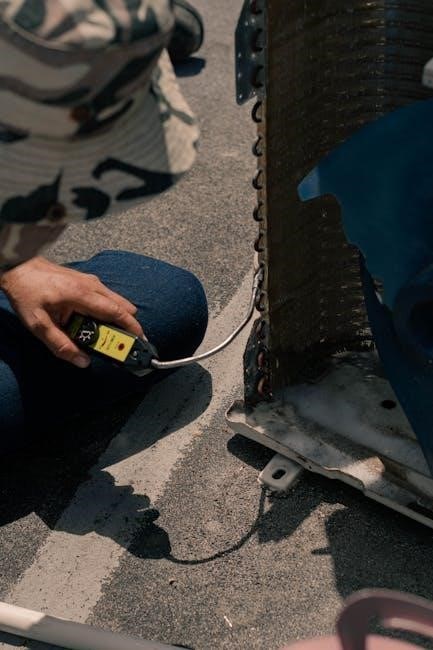
Addressing minor problems promptly can prevent costly repairs. Common issues include insufficient cooling, unusual noises, or error codes displayed on your Lennox system’s thermostat.
Air Conditioner Not Cooling
If your Lennox air conditioner isn’t cooling effectively, several factors could be at play. First, verify the thermostat is set to “Cool” and the desired temperature is lower than the room temperature. Check the air filter; a dirty filter restricts airflow, hindering cooling performance. Ensure outdoor unit isn’t obstructed by debris like leaves or branches.
Inspect the circuit breaker to confirm the unit has power. Frozen evaporator coils can also cause this issue – if suspected, turn off the system and allow the ice to thaw. A refrigerant leak is a more serious concern requiring professional attention.
Additionally, confirm all vents are open and unobstructed, allowing cool air to circulate freely. If these steps don’t resolve the problem, contacting a qualified Lennox technician is recommended for a thorough diagnosis and repair.
Unusual Noises
Hearing strange sounds from your Lennox air conditioner can indicate a developing problem. Rattling noises often suggest loose components within the outdoor unit – check for debris or unsecured panels. Whistling sounds might point to a restricted airflow, potentially caused by a dirty air filter or blocked vents.
Clicking sounds during startup or shutdown are generally normal, but persistent clicking could signal an electrical issue. Grinding or squealing noises often indicate a failing motor or compressor, requiring immediate professional attention. Humming without cooling suggests a potential problem with the compressor or a capacitor.
If you notice any unusual or persistent noises, it’s best to turn off the unit and contact a qualified Lennox technician for inspection and repair to prevent further damage.
Error Codes and Their Meanings
Modern Lennox air conditioners utilize a self-diagnostic system, displaying error codes to indicate specific issues. These codes provide valuable clues for troubleshooting, but professional interpretation is often necessary. A code like “101” might signal a flame rollout issue, while “104” could indicate a high-limit switch trip, suggesting overheating.
Codes related to refrigerant levels, such as “301” or “302”, require a qualified technician to diagnose and address potential leaks. Electrical faults are often indicated by codes in the “500” range. Always consult your specific Lennox model’s documentation for a complete list of error codes and their corresponding meanings.
Attempting repairs based solely on error codes without proper training can be dangerous and may void your warranty; contacting Lennox support or a certified technician is highly recommended.

Maintenance and Filter Replacement
Regular maintenance, including timely filter replacements and coil cleaning, maximizes Lennox air conditioner efficiency and extends its lifespan, ensuring optimal performance consistently.
Regular Filter Changes
Lennox air conditioners rely on clean air filters to maintain efficient operation and deliver optimal indoor air quality. Regularly changing your air filter is one of the simplest, yet most impactful, maintenance tasks you can perform. A dirty filter restricts airflow, forcing your system to work harder, which can lead to reduced cooling capacity, increased energy consumption, and potentially even system damage.
The frequency of filter changes depends on several factors, including the type of filter, the presence of pets, and the air quality in your area. Generally, a standard 1-inch filter should be replaced every 1-3 months. Higher-efficiency filters, such as pleated filters, may last longer, but should still be checked monthly. If you have pets or allergies, more frequent filter changes – perhaps every month – are recommended. Always refer to your Lennox unit’s specific documentation for the manufacturer’s recommendations regarding filter type and replacement schedule.
Coil Cleaning Procedures
Maintaining clean condenser and evaporator coils is vital for your Lennox air conditioner’s efficiency. Over time, coils accumulate dirt, dust, and debris, hindering heat transfer and reducing cooling performance. Regular cleaning ensures optimal operation and extends the lifespan of your unit. Before beginning, always disconnect power to the air conditioner at the breaker box for safety.
For the outdoor condenser coil, use a garden hose with a gentle spray nozzle to rinse away loose debris. Avoid high-pressure washing, as this can damage the delicate fins. For stubborn dirt, a commercially available coil cleaner can be applied, following the product’s instructions carefully. The evaporator coil, located inside the air handler, requires more cautious cleaning, often best left to a qualified Lennox technician to prevent damage. Inspect coils annually and clean as needed.

Lennox Warranty Information
Lennox air conditioners are backed by comprehensive warranties, protecting your investment against defects in materials and workmanship; registration is essential for full coverage details.
Registering Your Product
Promptly registering your new Lennox air conditioning system is a vital step to ensure seamless warranty coverage and access to exclusive benefits. Registration confirms your purchase date and validates your eligibility for warranty claims should any issues arise during the coverage period. You can typically register your product online through the official Lennox website, utilizing your system’s model and serial number – readily found on the unit’s data plate;

Alternatively, you may be able to register via a mailed-in registration card included with your system documentation. Accurate information, including your contact details and installation date, is crucial for a successful registration. Keeping a record of your registration confirmation is highly recommended. Registering unlocks access to important updates, promotional offers, and dedicated customer support resources, enhancing your overall ownership experience with Lennox.
Understanding Coverage Details
Lennox air conditioner warranties are designed to provide peace of mind, but understanding the specifics of your coverage is paramount. Warranties typically cover parts and labor for a defined period, varying based on the system’s components and registration status. Registered products often receive extended warranty terms compared to unregistered units, highlighting the importance of timely registration.
Coverage generally includes defects in materials and workmanship, but excludes issues arising from improper installation, maintenance, or external factors like power surges. Carefully review your warranty documentation to identify covered components, claim procedures, and any limitations. Knowing what’s covered – and what isn’t – empowers you to address potential issues efficiently and effectively, maximizing the value of your Lennox investment.
Contacting Lennox Support
Lennox offers comprehensive customer support through a dedicated phone number and extensive online resources, including FAQs and troubleshooting guides, ensuring prompt assistance.
Lennox Customer Service Phone Number
For direct assistance with your Lennox air conditioning system, reaching out to their customer service team is a valuable option. While a universally listed, single phone number isn’t prominently displayed across all official Lennox channels, accessing support is readily achievable. The best approach is to visit the official Lennox website and navigate to the “Contact Us” section.
Here, you’ll find options to connect with a representative, often including a callback request feature to avoid lengthy hold times. Alternatively, contacting your local Lennox dealer is highly recommended. Dealers possess in-depth knowledge of Lennox products and can provide tailored support specific to your installed system. They can also facilitate warranty claims and schedule service appointments efficiently. Remember to have your model and serial number readily available when contacting support, as this information streamlines the assistance process.
Online Resources and FAQs
Lennox provides a comprehensive suite of online resources designed to empower users with self-service support and troubleshooting guidance. The official Lennox website features an extensive Frequently Asked Questions (FAQ) section, addressing common concerns regarding system operation, maintenance, and error codes. This is a great starting point for resolving minor issues independently.
Furthermore, Lennox offers detailed product manuals and documentation available for download, providing in-depth information specific to your air conditioning model. Online parts lookup tools, utilizing the serial number, simplify the process of identifying and ordering replacement components. Many independent HVAC forums and online communities also offer valuable insights and peer-to-peer support. Utilizing these resources can often resolve issues quickly and efficiently, minimizing the need for professional service calls. Remember to always prioritize safety and consult a qualified technician for complex repairs.