Ishkur’s Guide to Electronic Music: A Comprehensive Overview
Ishkur’s Guide, crafted by Kenneth John Taylor, is a detailed, interactive flowchart mapping electronic music genres and their complex relationships, starting in 2000.
It boldly includes Hip Hop variants, challenging conventional electronic music history, and offers extensive pop musicology with a unique, snarky online presentation style.
Historical Context & Origins (2000 — Present)
Ishkur’s Guide initially emerged in the year 2000, a period marked by the rapid proliferation and fragmentation of electronic music genres. This was a time before the widespread adoption of the problematic “EDM” label, which Ishkur vehemently rejects as a descriptor. The initial Version 1.0 aimed to visually represent the evolving family tree of early electronic styles like house and techno, providing a much-needed organizational structure.
As the 21st century progressed, the guide underwent continuous updates, reflecting the emergence of new subgenres – from trance and drum and bass to the later aggressive sounds of brostep and dubstep, and the hip-hop influenced trap and moombahton. The guide’s longevity demonstrates its adaptability and relevance, becoming a crucial resource for navigating the increasingly complex landscape of electronic music. It’s a living document, constantly evolving to capture the nuances of a dynamic musical world.
The Author: Kenneth John Taylor (Ishkur)
Kenneth John Taylor, known online as Ishkur, is the creator and curator of the renowned electronic music guide. He approaches the subject with a unique blend of meticulous research, detailed pop musicology, and a distinctively wry, almost snarky, online persona. Ishkur’s dedication to accurately mapping the relationships between genres is evident in the guide’s intricate flowchart design.
He’s notably critical of simplistic genre categorization and particularly dismissive of the term “EDM,” considering its usage a sign of superficial understanding. Ishkur’s perspective isn’t driven by a desire to define “art” within electronic music – he actively resists such labeling – but rather by a commitment to presenting a comprehensive and nuanced understanding of the music’s evolution. His work is a testament to passionate, independent music scholarship.
Initial Release & Evolution of the Guide (Version 1.0)
Ishkur’s Guide to Electronic Music first appeared in 2000 as Version 1.0, immediately establishing itself as a unique resource for navigating the burgeoning landscape of electronic dance music. Initially conceived as an interactive, tongue-in-cheek “family tree,” it aimed to visually represent the connections between early electronic genres like house and techno.

Over time, the guide has undergone significant expansions and updates, reflecting the continuous evolution of electronic music itself. It’s grown far beyond its initial scope, incorporating a vast array of subgenres and even controversial inclusions like Hip Hop and its derivatives. The online format allows for dynamic updates, ensuring the guide remains a relevant and informative tool for enthusiasts and scholars alike. The current version, accessible at music.ishkur.com, continues this tradition of comprehensive mapping.
Core Philosophy: Avoiding the “EDM” Label
A central tenet of Ishkur’s Guide is a staunch rejection of the acronym “EDM” (Electronic Dance Music). Kenneth John Taylor, the guide’s creator, views the term with considerable disdain, dismissing any media utilizing it as unreliable and fundamentally flawed. This aversion stems from a belief that “EDM” is an overly broad and often misused categorization, lacking the nuance required to accurately represent the diverse world of electronic music.
Ishkur prioritizes precision and historical context, favoring specific genre classifications over the umbrella term. He believes “EDM” obscures the intricate relationships and unique characteristics of individual styles. This philosophy underscores the guide’s meticulous approach to genre mapping, aiming for a detailed and accurate representation of electronic music’s evolution, free from the perceived imprecision of the “EDM” label.
Inclusion of Hip Hop & its Variants ― A Controversial Choice
Ishkur’s Guide distinguishes itself by ambitiously incorporating Hip Hop and its numerous subgenres into the electronic music family tree, a decision that diverges from the approach of many electronic music historians. This inclusion sparks debate, as traditional perspectives often separate the two genres, potentially due to cultural biases or narrow definitions of “electronic music.”
Ishkur’s rationale centers on the increasing electronic production techniques within Hip Hop, particularly in subgenres like Trap and Moombahton. He argues that the electronic elements are integral, justifying their inclusion within the broader scope of the guide. This bold move challenges conventional boundaries and encourages a more inclusive understanding of electronic music’s influences and evolution, even if it remains a point of contention among purists.

Key Genres & Their Relationships
Ishkur’s Guide meticulously details core electronic genres – House, Techno, Trance, and Drum and Bass – and illustrates their intricate connections through an interactive, visual flowchart.
House Music: The Foundation
House music, as presented within Ishkur’s Guide, is rightfully positioned as the foundational pillar upon which much of modern electronic dance music is built. Originating in the early 1980s in Chicago, it’s characterized by its repetitive 4/4 beat, typically around 118 to 135 beats per minute, and prominent use of synthesized basslines.
The guide emphasizes House’s crucial role in establishing the core aesthetic and structural elements that would later define countless subgenres. It wasn’t merely a sound; it was a cultural movement born from warehouse parties and a desire for inclusive, energetic dance experiences. Ishkur highlights how early House producers innovatively sampled disco, funk, and soul, layering these elements with drum machines and synthesizers.
The interactive flowchart within the guide visually demonstrates House’s direct lineage to genres like Progressive House and, more distantly, influences on even seemingly disparate styles like Trap. Understanding House, therefore, is paramount to navigating the broader landscape mapped by Ishkur’s comprehensive work.
Techno: Detroit’s Contribution
Ishkur’s Guide meticulously details Techno as Detroit’s pivotal contribution to the electronic music canon. Emerging in the mid-1980s, Techno distinguished itself from House through a colder, more futuristic aesthetic, often prioritizing minimalist arrangements and industrial soundscapes. The guide emphasizes its roots in electro, funk, and the burgeoning synthesizer technology of the era.
Unlike the soulful sampling of House, Detroit Techno producers – the “Belleville Three” (Juan Atkins, Derrick May, and Kevin Saunderson) being central figures – focused on creating entirely new sounds, exploring themes of alienation, technology, and urban decay. Ishkur’s flowchart illustrates Techno’s branching influence, leading to subgenres like Minimal Techno and Acid Techno.
The guide doesn’t shy away from highlighting Techno’s distinct sonic palette – its driving rhythms, metallic percussion, and atmospheric textures. It’s presented not just as a genre, but as a reflection of Detroit’s post-industrial landscape and a forward-thinking musical experiment.
Trance: Melodic and Hypnotic
Ishkur’s Guide positions Trance as a genre defined by its melodic focus and hypnotic qualities, diverging from the more rhythmic emphasis of Techno and House. Originating in the early 1990s, primarily in Germany, Trance aimed to induce altered states of consciousness through layered synthesizers, soaring melodies, and repetitive rhythmic patterns.
The guide highlights the importance of atmosphere and emotional depth within Trance, noting its frequent use of pads, arpeggios, and build-ups to create a sense of euphoria and transcendence. Ishkur’s mapping demonstrates Trance’s connections to both House and Techno, but emphasizes its unique emphasis on melodic progression and harmonic complexity.
Subgenres like Progressive Trance and Uplifting Trance are detailed, showcasing the genre’s evolution. The guide acknowledges Trance’s often-criticized tendency towards cliché, but defends its enduring appeal as a form of escapism and emotional expression.
Drum and Bass: Breakbeats and Basslines
Ishkur’s Guide meticulously charts Drum and Bass as a genre fundamentally built upon complex, syncopated breakbeats and powerfully sub-bass frequencies. Emerging in the early 1990s from the UK rave scene, it evolved from Jungle, retaining its fast tempo and energetic spirit but refining its production techniques.
The guide emphasizes the crucial role of sampling and manipulation of drum breaks, often sourced from funk and jazz records, creating intricate rhythmic textures. Ishkur illustrates how Drum and Bass distinguishes itself through its emphasis on bassline design, ranging from smooth and rolling to aggressive and distorted.
Subgenres like Liquid Funk, Neurofunk, and Jump-Up are explored, demonstrating the genre’s diverse range. The guide acknowledges the technical skill required to produce Drum and Bass, highlighting its influence on other genres and its continued innovation.
Subgenres & Offshoots ― A Detailed Breakdown
Ishkur’s Guide dedicates significant detail to the proliferation of subgenres and offshoots within electronic music, showcasing the constant evolution and hybridization of styles. It moves beyond simple categorization, illustrating how genres bleed into one another, creating nuanced sonic landscapes.
The guide meticulously breaks down genres like Brostep, Trap, and Moombahton, tracing their origins in Hip Hop and Dubstep, and analyzing their distinct characteristics – aggressive bass drops, triplet hi-hats, and Latin-influenced rhythms respectively. Dutch House, with its energetic and minimalistic sound, also receives focused attention.
Ishkur emphasizes that these aren’t isolated entities, but rather points on a continuum, influenced by and influencing other styles. The interactive flowchart allows users to explore these connections visually, understanding the complex genealogy of electronic music.
Progressive House: Blurring the Lines
Ishkur’s Guide positions Progressive House as a pivotal genre demonstrating the blurring of boundaries within electronic music, specifically highlighting its fusion of Trance and House elements. It’s not simply a combination, but a stylistic evolution where melodic and hypnotic qualities of Trance are integrated into the four-on-the-floor structure of House.
The guide illustrates how Progressive House moved away from the more rigid structures of its parent genres, embracing longer, more atmospheric builds and breakdowns. This created a sound that prioritized emotional impact and sonic texture over pure dancefloor functionality.
Ishkur emphasizes that understanding Progressive House requires recognizing its transitional nature, acting as a bridge between distinct electronic music families. The interactive flowchart visually represents this, showing its connections to both Trance and House, and its influence on subsequent styles.
Brostep & Dubstep: The Rise of Aggression
Ishkur’s Guide charts the emergence of Brostep and Dubstep as a significant shift towards aggressive sonic textures within electronic music. Originating as a UK-based subgenre, Dubstep, the guide details its evolution into a more intense and commercially-focused sound, particularly with the rise of Brostep.
Ishkur highlights how Brostep, characterized by its distorted basslines and aggressive synth leads, became a prominent force in the early 2010s. The guide acknowledges the controversial nature of Brostep, often criticized for its departure from Dubstep’s original, more nuanced sound.
The interactive flowchart demonstrates Dubstep’s lineage, tracing its roots back to 2-step garage and drum and bass. Ishkur emphasizes that understanding these genres is crucial to appreciating the context of Brostep’s development and its place within the broader electronic music landscape.
Trap & Moombahton: Hip-Hop Influences
Ishkur’s Guide meticulously details how Trap and Moombahton represent a significant intersection between electronic music and Hip-Hop culture. The guide illustrates Trap’s origins in Southern Hip-Hop production, specifically its use of 808s, heavy bass, and rapid hi-hat patterns, adapted for electronic dance music contexts.
Ishkur explains Moombahton as a fusion of House and Reggaeton, born from DJ Dave Nada’s experimentation. The guide showcases how both genres demonstrate a clear departure from traditional electronic music structures, incorporating rhythmic and melodic elements directly from Hip-Hop and Latin American music.
The interactive flowchart within Ishkur’s Guide visually connects Trap and Moombahton to their Hip-Hop ancestors, emphasizing the importance of understanding these influences. It highlights how these genres broadened the definition of electronic music, embracing diverse cultural sounds and production techniques.
Dutch House: Energetic and Minimalistic
Ishkur’s Guide positions Dutch House as a distinct subgenre characterized by its energetic rhythms and minimalistic sound design. The guide details how it emerged in the late 2000s, diverging from the more melodic Progressive House prevalent at the time, and becoming a significant force in electronic dance music;
Ishkur emphasizes the genre’s focus on driving basslines, often utilizing heavily sidechained synths, and its stripped-down arrangements. The guide illustrates how Dutch House prioritized impactful drops and a raw, energetic feel over complex harmonic structures, creating a uniquely powerful sound.
Within Ishkur’s Guide’s interactive flowchart, Dutch House is shown as a branch stemming from Minimal House, yet possessing a heightened intensity. It highlights artists who defined the sound, demonstrating its influence on subsequent electronic music trends and its place within the broader genre landscape.

Navigating the Ishkur Guide: Features & Functionality
Ishkur’s Guide boasts an interactive flowchart, detailed genre mapping, illustrative artists, and data visualization, offering a unique exploration of electronic music’s evolution.
Interactive Flowchart & Genre Mapping
The core of Ishkur’s Guide is its remarkably detailed and interactive flowchart, visually representing the lineage and connections between numerous electronic music genres. This isn’t a static family tree; it’s a dynamic map allowing users to navigate the complex web of influences and subgenres.
Each genre is represented as a node, and lines illustrate the relationships – influences, derivations, and cross-pollination. Clicking on a genre reveals further information, expanding the map and offering deeper insights. The guide meticulously charts the evolution from foundational genres like House and Techno, through the proliferation of Trance, Drum and Bass, and into more contemporary styles like Brostep, Trap, and Dutch House.
This genre mapping isn’t simply about categorization; it’s about understanding the how and why of musical development. Ishkur’s approach emphasizes the fluidity and interconnectedness of electronic music, rejecting rigid boundaries and highlighting the constant evolution of sound. The interactive nature allows users to explore at their own pace, discovering unexpected connections and gaining a comprehensive understanding of the genre landscape.
Emphasis on Relationships Between Genres
A defining characteristic of Ishkur’s Guide is its deliberate focus on the relationships between genres, rather than treating them as isolated entities. This approach challenges the common tendency towards strict categorization within electronic music, acknowledging the constant blending and borrowing of elements.
The guide doesn’t simply list genres; it illustrates how one genre influences another, how subgenres emerge from parent styles, and how seemingly disparate sounds can converge. This is visually represented in the interactive flowchart, with connections clearly indicating lines of influence and derivation.
Ishkur actively avoids rigid boundaries, recognizing that electronic music is a fluid and evolving landscape. He demonstrates how genres like Progressive House blur the lines between House and Trance, or how Trap and Moombahton draw heavily from Hip Hop influences. This emphasis on interconnectedness provides a nuanced understanding of the genre’s history and development, moving beyond simple labels and towards a more holistic view.
Examples & Illustrative Artists
Ishkur’s Guide doesn’t merely define genres theoretically; it grounds them in reality through carefully selected examples of artists and tracks. These aren’t presented as definitive representatives, but rather as illustrative points within the broader genre map, showcasing the diversity within each style.

The guide utilizes these examples to demonstrate the nuances of genre classification, highlighting how artists can embody multiple influences or push boundaries. While specific artists aren’t always explicitly tied to a single genre, their work serves to illuminate the characteristics and evolution of various styles.
The inclusion of illustrative artists allows users to explore the practical application of Ishkur’s genre mapping. It moves beyond abstract definitions, offering a tangible entry point for discovering new music and understanding the connections between different sounds. This practical approach is a key element of the guide’s enduring appeal and informational value.
Data Visualization & Pop Musicology
Ishkur’s Guide uniquely blends detailed data visualization with insightful pop musicology, creating a resource that’s both aesthetically engaging and intellectually stimulating. The interactive flowchart isn’t simply a list of genres; it’s a dynamic map illustrating the relationships and influences between them.
This visual approach allows users to grasp the complex evolution of electronic music in a way that traditional textual descriptions often fail to achieve. The guide’s pop musicology component provides context, analyzing the cultural and historical factors that shaped these genres.
Ishkur’s approach isn’t purely academic; it’s infused with a distinctive online snark, making the information accessible and entertaining. This combination of rigorous analysis and playful presentation is a hallmark of the guide’s success, attracting a diverse audience of music enthusiasts.
Criticisms & Controversies Surrounding the Guide
Ishkur’s Guide faces debates on genre classification, particularly regarding Pendulum’s categorization, and sparks discussion about whether electronic music can truly be considered “art”.
Debates on Genre Classification
Ishkur’s Guide frequently ignites passionate debates concerning the precise categorization of electronic music genres, a landscape known for its fluidity and constant evolution. Many users actively question specific placements within the interactive flowchart, particularly as new subgenres emerge and existing ones blend.
The inclusion of Hip Hop and its derivatives remains a point of contention, with some purists arguing it falls outside the traditional definition of “electronic” music, despite the significant electronic production techniques employed.
Furthermore, the classification of artists like Pendulum – often debated as a genre unto itself – exemplifies the challenges of rigidly defining musical boundaries. Critics point to the guide’s subjective nature, acknowledging that genre is often a matter of interpretation and personal preference, rather than strict adherence to technical criteria. These ongoing discussions highlight the guide’s role as a catalyst for critical engagement with electronic music’s diverse and ever-changing forms.
The “Art” Question: Ishkur’s Perspective
Kenneth John Taylor (Ishkur) expresses a distinct unease when his work is framed as “art,” revealing a deliberate distancing from artistic interpretation. He views the guide primarily as a comprehensive, data-driven mapping of musical relationships, grounded in pop musicology and meticulous genre analysis.
This reluctance stems from a desire to maintain objectivity and avoid subjective evaluations of musical merit. Ishkur prioritizes the structural and historical connections between genres, rather than assigning aesthetic value or artistic significance.
He seems to prefer the guide be understood as a functional tool for navigating the complex world of electronic music, a detailed “family tree” of sounds, rather than a statement on artistic expression. This perspective underscores his commitment to analytical rigor and a pragmatic approach to understanding musical evolution, rejecting the potentially ambiguous label of “art.”
Accuracy & Updates (Current Version)
Ishkur’s Guide, initially launched in 2000 with Version 1.0, has undergone continuous refinement and updates, reflecting the ever-evolving landscape of electronic music. While consistently praised for its detailed genre mapping and relational insights, the guide isn’t without its critics, sparking debates on classification accuracy.
Recent discussions online indicate ongoing scrutiny of the guide’s categorization, with users raising questions about specific genre placements and the inclusion of certain artists. Despite these challenges, the guide remains a valuable resource, accessible at music.ishkur.com.
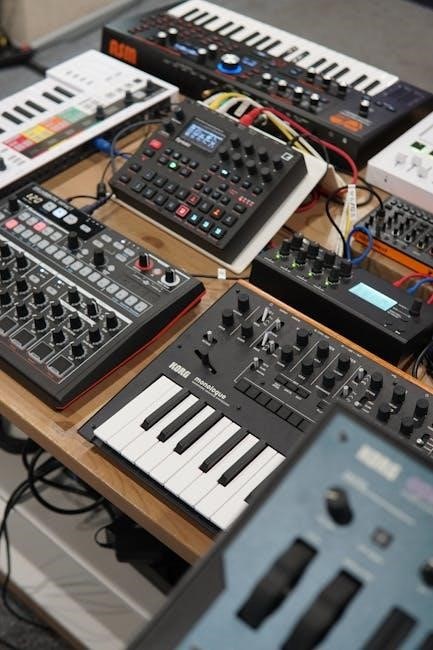
The current version strives for accuracy, but acknowledges the inherent subjectivity in defining and categorizing musical genres. Ishkur’s commitment to maintaining a dynamic and responsive guide ensures it remains a relevant and informative tool for enthusiasts and researchers alike.
Pendulum as a Genre? — A Point of Contention
Ishkur’s Guide notably identifies Pendulum as a distinct genre, a decision that has consistently fueled debate amongst electronic music fans and historians. This categorization diverges from more conventional approaches, prompting considerable discussion regarding the band’s stylistic fluidity and genre-bending sound.
Critics argue that Pendulum’s music incorporates elements from multiple genres – drum and bass, trance, and even rock – making it difficult to classify as a standalone entity. However, proponents of Ishkur’s approach emphasize the band’s unique sonic signature and significant influence, justifying its independent genre status.
This point of contention highlights the inherent challenges in rigidly defining electronic music genres, and showcases Ishkur’s willingness to challenge established norms within the guide’s comprehensive framework.