
Timothy Corrigan’s concise guide expertly bridges film study and precise writing, offering students a foundational resource for thoughtful film criticism and analysis.
This widely-used text demystifies the process, from initial note-taking to polished revisions, empowering aspiring writers to articulate their cinematic insights effectively.
Corrigan’s approach integrates key film theories and terminology, equipping readers to engage with films on a deeper, more analytical level, fostering critical thinking.
The Core Purpose of the Guide
Corrigan’s Short Guide to Writing About Film fundamentally aims to unlock the art of film criticism for students and enthusiasts alike. It’s designed to move beyond simply watching movies, and instead, cultivate the ability to analyze and articulate informed, well-supported arguments about them.
The guide doesn’t just present film theories; it actively demonstrates how to apply those theories in written analysis. It provides a structured pathway for developing a critical viewing approach, mastering essential terminology, and constructing compelling essays.
Ultimately, the core purpose is to empower writers to confidently and effectively communicate their understanding of cinema, transforming passive observation into insightful, persuasive scholarship.
Target Audience: Students and Enthusiasts
Corrigan’s guide is primarily tailored for students formally studying film, or those enrolled in courses requiring film analysis essays. It serves as an ideal companion for introductory film studies, communication, and media courses, offering practical guidance for academic writing.
However, its accessibility extends beyond the classroom. The book also caters to passionate film enthusiasts eager to refine their critical thinking and writing skills. Anyone seeking to move beyond casual movie-watching and engage with cinema on a deeper level will find value.
It’s a resource for both beginners and those with some existing knowledge, aiming to enhance analytical abilities and articulate cinematic interpretations effectively.

Preparing to Watch & Write
Corrigan emphasizes thoughtful preparation – developing a critical viewing approach, strategic note-taking, and formulating initial ideas before beginning the writing process.
Developing a Critical Viewing Approach
Corrigan’s guide stresses that effective film analysis begins with active, engaged viewing, moving beyond passive entertainment. He advocates for consciously observing cinematic techniques – mise-en-scène, cinematography, editing, and sound – and considering their potential effects.
This involves questioning assumptions, recognizing patterns, and resisting immediate interpretations. Students are encouraged to analyze how a film conveys meaning, not just what meaning it conveys.
Developing this critical lens allows for a more nuanced and insightful understanding of the film’s artistry and its broader cultural context, forming the basis for strong analytical writing.
Note-Taking Strategies for Film Analysis
Corrigan emphasizes that thorough note-taking is crucial for transforming observations into compelling analysis. He suggests moving beyond simple plot summaries, focusing instead on specific details – visual compositions, dialogue exchanges, recurring motifs, and sound cues.
Effective notes should capture not only what happens, but also how it happens and why it might matter.
Time-stamping observations is vital for easy referencing during the writing process. These detailed notes serve as the raw material for building arguments and supporting claims with concrete evidence from the film itself.
Formulating Initial Responses & Ideas
Corrigan advocates for embracing initial, even vague, reactions to a film as a starting point for deeper exploration. These first impressions – a feeling, a question, a striking image – can ignite analytical thinking.
He encourages students to resist immediate judgment and instead, articulate why a film evokes a particular response.
Brainstorming potential topics based on these initial reactions is key. This involves asking probing questions about the film’s themes, techniques, and overall effect, laying the groundwork for a focused and insightful analysis.
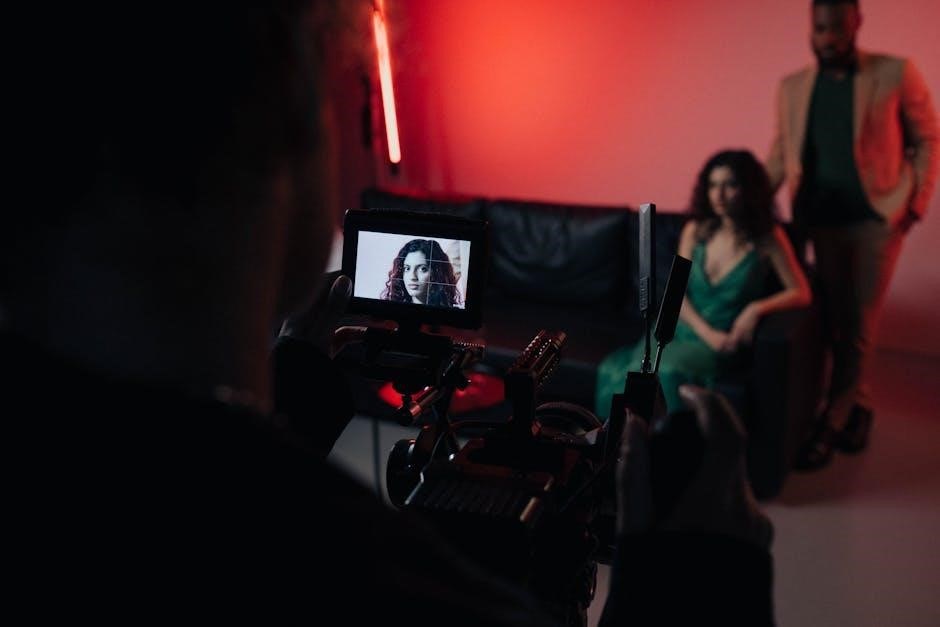
Film Terminology & Concepts
Corrigan’s guide thoroughly introduces essential cinematic techniques and narrative structures, providing students with a robust vocabulary for precise film analysis and writing.
Key Cinematic Techniques (Mise-en-scène)
Mise-en-scène, a foundational concept detailed in Corrigan’s guide, encompasses all visual elements within the frame – setting, props, costumes, lighting, and actor positioning.
Understanding how these elements interact is crucial for interpreting a film’s meaning and the director’s artistic choices. The guide emphasizes analyzing how these components contribute to the overall aesthetic and thematic impact.
Corrigan stresses that careful observation of mise-en-scène reveals layers of symbolism and narrative information, enabling writers to move beyond surface-level descriptions and offer insightful interpretations.
Students learn to dissect how these visual cues shape audience perception and contribute to the film’s emotional resonance, forming the basis for compelling analytical essays.
Narrative Structures & Storytelling
Corrigan’s guide highlights the importance of recognizing various narrative structures in film, moving beyond simple plot summaries to analyze how stories are told.
He explores common structures like linear, non-linear, and episodic narratives, emphasizing how these choices impact audience engagement and thematic development.
The text encourages students to identify key narrative elements – exposition, rising action, climax, falling action, and resolution – and analyze their function within the film’s overall design.
Understanding storytelling techniques, such as flashbacks, foreshadowing, and point of view, is presented as vital for crafting insightful and well-supported film analyses.
Understanding Genre Conventions
Corrigan’s guide stresses the significance of recognizing genre conventions as a crucial step in film analysis, moving beyond simple categorization.
He explains how genres establish expectations for audiences, influencing their interpretations and emotional responses, and how filmmakers strategically utilize or subvert these expectations.
Students are encouraged to identify recurring motifs, character archetypes, and stylistic elements associated with specific genres – like Westerns, horror, or comedies.
Analyzing a film’s relationship to its genre, whether it reinforces or challenges established norms, provides a valuable framework for developing a nuanced critical argument.

Approaches to Film Analysis
Corrigan’s guide introduces diverse analytical lenses – Formalist, Auteur, Ideological, and Psychoanalytic – to unlock deeper understanding and informed critical writing.
These approaches offer varied frameworks for interpreting films, moving beyond subjective impressions to rigorous, evidence-based arguments.
Formalist Approach: Focusing on Form
Corrigan emphasizes the Formalist approach as centering on the intrinsic elements of a film – its technical and artistic components – rather than external factors.
This method prioritizes analyzing how a film achieves its effects through cinematography, editing, mise-en-scène, and sound design, independent of thematic or contextual concerns.
Formalist analysis dissects the film’s structure, patterns, and techniques to reveal how these elements contribute to the overall meaning and aesthetic experience.
It’s about understanding the ‘how’ of filmmaking, recognizing that form is content, and meticulously examining the film’s construction to uncover its artistic intentions and impact.
Essentially, it’s a close reading of the film’s visual and auditory language.
Auteur Theory: The Director as Author
Corrigan introduces Auteur Theory, positing the director as the primary “author” of a film, imbuing their work with a consistent stylistic signature and thematic preoccupations.
This approach moves beyond simply crediting the director for overseeing production; it argues for recognizing a personal artistic vision consistently expressed across their filmography.
Analyzing a director’s oeuvre reveals recurring motifs, techniques, and perspectives, demonstrating a cohesive artistic identity.
Auteurism encourages examining how a director’s unique style shapes the narrative, characters, and overall meaning of their films, transcending studio constraints.
It’s about identifying the director’s ‘voice’ within the cinematic medium.
Ideological Criticism: Examining Social Context
Corrigan highlights Ideological Criticism, which analyzes how films reflect and reinforce dominant societal values, beliefs, and power structures.
This approach moves beyond surface-level narratives to uncover underlying messages about class, gender, race, and other social constructs.
It questions how films normalize certain ideologies while marginalizing others, often subtly perpetuating existing inequalities.
Analyzing a film’s representation of social issues reveals its stance on these matters, exposing potential biases or critiques;
Ideological analysis considers the historical and cultural context of a film’s production and reception.
Psychoanalytic Film Theory
Corrigan introduces Psychoanalytic Film Theory, applying the principles of Sigmund Freud and Jacques Lacan to film analysis.
This approach explores how films tap into unconscious desires, anxieties, and repressed emotions within both characters and audiences.
Key concepts include the Oedipus complex, the gaze, and the symbolic order, revealing hidden meanings within cinematic narratives.
Psychoanalytic readings often focus on character motivations, dream sequences, and symbolic imagery to uncover underlying psychological themes.
It examines how films reflect and shape our understanding of identity, sexuality, and the human psyche.

Writing Style & Structure
Corrigan emphasizes crafting strong thesis statements, developing coherent paragraphs, and effectively using evidence to support film analysis with clarity and precision.
Crafting a Strong Thesis Statement
Corrigan’s guide highlights the thesis statement as the cornerstone of effective film analysis writing. A compelling thesis moves beyond simple plot summary, instead presenting a focused, arguable claim about the film’s meaning or technique.
It should articulate how the film achieves its effects, not merely what those effects are. A strong thesis isn’t a statement of fact, but an interpretation requiring evidence from the film itself to support it.
Corrigan stresses avoiding broad generalizations; instead, concentrate on specific elements and their contribution to the overall argument, ensuring a clear and concise central idea.
Developing Coherent Paragraphs
Corrigan’s guide emphasizes that well-structured paragraphs are vital for clear film analysis. Each paragraph should focus on a single, specific point that directly supports the overarching thesis statement.
Effective paragraphs begin with a topic sentence introducing the main idea, followed by supporting evidence – detailed film examples – and insightful analysis connecting the evidence back to the thesis.
Corrigan advocates for logical transitions between sentences and paragraphs, ensuring a smooth flow of ideas and preventing disjointed arguments. Strong paragraphs demonstrate a clear line of reasoning.
Effective Use of Evidence & Examples
Corrigan’s guide stresses the importance of grounding film analysis in concrete evidence. Assertions about a film must be supported by specific details – shots, scenes, dialogue, or editing choices – not just general impressions.
He encourages students to integrate technical details seamlessly into their analysis, explaining how these elements contribute to the film’s meaning or effect, rather than simply listing them.
Corrigan highlights the value of using both student and professional essay samples to illustrate effective evidence integration, demonstrating how to move beyond description to insightful interpretation;

Researching Film
Corrigan emphasizes utilizing film databases, archives, and scholarly sources to enrich analysis. Proper citation methods are crucial for academic integrity and supporting claims.
Utilizing Film Databases & Archives
Corrigan’s guide highlights the importance of robust research, beginning with comprehensive film databases. These resources provide essential information – cast, crew, production details, and critical reception – forming a solid foundation for analysis.
Exploring film archives, including the Internet Archive, unlocks access to rare materials and historical context. Students can uncover valuable insights into a film’s production and cultural impact.
Effectively navigating these resources allows writers to move beyond surface-level observations, grounding their arguments in factual evidence and scholarly understanding, ultimately strengthening their essays.
Accessing these tools is paramount for informed and persuasive film criticism.
Finding Scholarly Sources & Criticism
Corrigan emphasizes the necessity of supporting film analysis with credible scholarly sources. Moving beyond general reviews, students should seek academic journals, books, and essays offering in-depth critical perspectives.
These sources provide established interpretations and theoretical frameworks, enriching your understanding and bolstering your arguments. Utilizing scholarly criticism demonstrates engagement with the existing discourse surrounding the film.
Properly integrating these sources—through careful citation—adds weight and authority to your writing, showcasing rigorous research and analytical depth, crucial for effective film essays.
This elevates analysis beyond personal opinion.
Proper Citation Methods
Corrigan’s guide underscores the vital importance of meticulous citation when referencing scholarly sources in film analysis. Accurate attribution avoids plagiarism and demonstrates academic integrity, building credibility with your audience.
He likely advocates for a consistent citation style—such as MLA or Chicago—applied uniformly throughout your essay. This includes properly formatted footnotes, endnotes, and a comprehensive bibliography or works cited page.
Detailed citation guides are readily available online and in libraries, ensuring adherence to established academic standards. Mastering these methods is fundamental to effective scholarly writing.
It’s a cornerstone of academic honesty.

Manuscript Format & Revision

Corrigan emphasizes standard formatting guidelines and self-editing techniques for clarity. He stresses the value of peer review and incorporating feedback for a polished final draft.
Standard Formatting Guidelines
Corrigan’s guide implicitly supports adherence to conventional academic formatting, though specifics aren’t exhaustively detailed. Generally, essays benefit from double-spacing, standard margins (typically one inch), and a legible font like Times New Roman (size 12).
Proper page numbering is crucial, alongside a clear header with your name and essay title. Following MLA or Chicago style for citations is essential, ensuring academic integrity and giving credit to sources.
Consistent formatting demonstrates professionalism and allows readers to focus on the content, not deciphering presentation. A well-formatted manuscript reflects careful scholarship and respect for the audience.
Self-Editing Techniques
Corrigan emphasizes revision as integral to strong film writing. Begin by reading your essay aloud – this reveals awkward phrasing and grammatical errors. Focus on clarity; ensure each sentence contributes to your overall argument.
Scrutinize your thesis statement, verifying it accurately reflects your analysis. Check for concise language, eliminating unnecessary words. Ensure evidence directly supports your claims, and that examples are thoroughly explained.
Finally, proofread meticulously for typos and stylistic inconsistencies. A fresh perspective – perhaps after a break – aids in identifying overlooked errors, refining your work.
Peer Review & Feedback Incorporation
Corrigan highlights the value of external feedback. Share your draft with peers, requesting honest critique on clarity, argumentation, and evidence. Be open to suggestions, even if initially challenging.
Specifically ask reviewers to assess your thesis statement’s strength and the coherence of your paragraphs. Consider their comments on the effectiveness of your examples and the overall persuasiveness of your analysis.
Don’t defensively reject feedback; instead, thoughtfully evaluate its merit. Incorporate constructive criticism to strengthen your essay, refining your ideas and improving your writing.

Analyzing Specific Film Elements
Corrigan guides readers to dissect cinematography, editing, sound design, and performance, demonstrating how these elements contribute to a film’s overall meaning and impact.
Examining Cinematography & Editing
Corrigan’s guide emphasizes that cinematography and editing aren’t merely technical aspects, but crucial storytelling tools. He encourages a detailed examination of shot composition, camera movement, and framing, asking how these choices influence the viewer’s perception.
Analyzing editing – cuts, transitions, and pacing – reveals how filmmakers manipulate time and space, building tension or establishing rhythm. Students learn to identify patterns and understand their narrative function.
Effective analysis connects these technical elements to broader themes and arguments, demonstrating how visual style reinforces or complicates the film’s message, ultimately enhancing critical writing.
Sound Design & its Impact
Corrigan’s guide highlights sound design as a frequently underestimated, yet powerfully evocative element of filmmaking. He urges writers to move beyond simply noting the presence of sound, and instead, analyze its specific qualities and effects.
Consider diegetic versus non-diegetic sound, the use of silence, and how sound bridges or overlaps scenes. Analyzing sound’s emotional impact—how it creates mood, foreshadows events, or underscores themes—is vital.
A strong analysis demonstrates how sound works in concert with visuals to shape the audience’s experience, enriching the film’s overall meaning and bolstering a well-supported argument.
Performance & Acting Choices
Corrigan emphasizes that analyzing performance extends far beyond simply judging whether an actor is “good” or “bad.” Effective film writing delves into the specific choices actors make and why those choices matter within the film’s context.
Consider aspects like physicality, vocal delivery, facial expressions, and how these elements contribute to character development and narrative meaning. Explore how performances interact with mise-en-scène and other cinematic techniques.
A nuanced analysis demonstrates how acting choices illuminate themes, reveal character motivations, and ultimately, enhance the film’s overall impact on the viewer, supporting a focused thesis.