Baseball Helmet Size Guide: Ensuring a Safe and Comfortable Fit (Updated February 15, 2026)
Finding the right baseball helmet size is crucial for player safety and performance. This comprehensive guide, updated today, February 15, 2026, will help you navigate Rawlings’ sizing charts and ensure a secure, comfortable fit.
Understanding the Importance of Proper Helmet Fit
A correctly fitted baseball helmet is paramount for protecting players from potentially serious head injuries. Impacts during gameplay, whether from a pitched ball, a swinging bat, or a collision with another player, can cause concussions or more severe trauma. A helmet that is too large offers insufficient protection, allowing the head to move excessively upon impact, diminishing the helmet’s protective capabilities.
Conversely, a helmet that is too small can be incredibly uncomfortable, restricting blood flow and causing distraction. This discomfort can impair a player’s focus and reaction time, increasing the risk of injury. Proper fit ensures the helmet stays securely in place, absorbing and dispersing impact forces effectively.
Beyond safety, a well-fitting helmet enhances performance. A comfortable helmet allows players to concentrate on the game without being bothered by constant adjustments or discomfort. Investing time in accurate measurement and selecting the appropriate size is a vital step in prioritizing player well-being and maximizing their potential on the field.
Why Helmet Fit Matters: Safety First
The primary function of a baseball helmet is to safeguard against head injuries, and a proper fit is the cornerstone of this protection. Baseballs can travel at speeds exceeding 70 mph, and even a glancing blow can deliver significant force. A loose helmet compromises its ability to absorb this impact, increasing the risk of skull fractures, concussions, and other traumatic brain injuries.
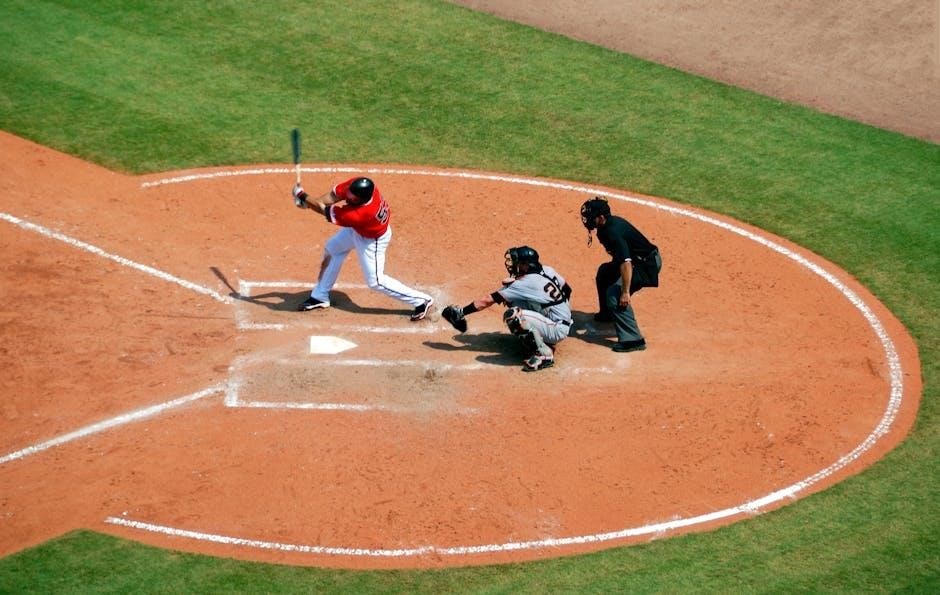
A secure fit minimizes helmet movement during impact, ensuring the protective padding effectively distributes the force across the head. This distribution reduces the concentration of energy on any single point, lessening the severity of potential injuries. Furthermore, a well-fitted helmet provides crucial facial protection, shielding against errant pitches and batted balls.
Ignoring proper fit isn’t just a comfort issue; it’s a safety hazard. Prioritizing a snug, stable fit is non-negotiable for players of all ages and skill levels. Remember, a helmet is only as effective as its fit – making it the most critical aspect of protective gear.
Measuring Your Head for a Baseball Helmet
Accurate head measurement is the foundation of finding the correct baseball helmet size. This process ensures you select a helmet that provides optimal protection and comfort. Begin by locating a flexible measuring tape – a cloth or vinyl tape is ideal. Avoid using metal measuring tapes, as they lack the necessary flexibility to conform to the head’s shape.
Position the measuring tape approximately one inch above the eyebrows, circling the head at its widest point. Maintain a level tape measure throughout the entire circumference. Don’t pull the tape too tightly, nor let it be too loose; aim for a snug, but comfortable fit. Repeat the measurement two or three times to ensure consistency.
Record the largest measurement in inches or centimeters. This measurement will serve as your primary reference when consulting helmet sizing charts. It’s crucial to measure the head each time a new helmet is being considered, as head size can change over time, especially in growing children and adolescents.
Tools You’ll Need for Accurate Measurement
Obtaining a precise head measurement requires only a few simple tools, readily available in most households. The most essential item is a flexible measuring tape – ideally constructed from cloth or vinyl. These materials conform comfortably to the head’s shape, unlike rigid metal tapes which can distort the measurement.
While not strictly required, a mirror can be incredibly helpful, especially when measuring independently. It allows you to visually confirm the tape measure is positioned correctly – approximately one inch above the eyebrows and encircling the widest part of the head.
A pen and paper (or a digital note-taking device) are necessary to record the measurements accurately. Repeating the measurement several times and noting each result will help identify the most consistent and reliable size. Finally, having access to the manufacturer’s sizing chart (like those from Rawlings, Easton, or Mizuno) is vital for translating your head measurement into the appropriate helmet size.
Step-by-Step Head Measurement Instructions
Accurate measurement is key to a safe and comfortable helmet fit. Begin by positioning the measuring tape approximately one inch above the eyebrows, ensuring it remains level. This is a critical starting point for consistent results.
Wrap the tape snugly around the head, encircling the widest part – typically located at the back of the head. Avoid pulling the tape too tightly, as this will result in a smaller measurement. The tape should be firm but not constricting.
Record the measurement in inches. It’s highly recommended to repeat this process two or three times to ensure accuracy. If there are variations, use the largest measurement as your guide.
If you’re assisting someone else, ensure they remain still and their head is level throughout the process. Double-checking the tape’s position and reading the measurement carefully will minimize errors. Refer to the relevant brand’s sizing chart with this measurement.
Decoding Baseball Helmet Sizing Charts
Understanding helmet sizing charts is vital for a proper fit. Most manufacturers, like Rawlings, present sizes in inches or centimeters, corresponding to head circumference measurements. Charts often categorize sizes as Small, Medium, Large, and Extra-Large, but these can vary between brands.
Rawlings’ charts, for example, link specific head sizes to helmet sizes. A head measuring 21-22 inches might correspond to a Small, while 22.5-23.5 inches could indicate a Medium. Always consult the specific chart for the helmet you’re considering.
Pay attention to any notes regarding age or skill level, as some helmets are designed for youth players with smaller head sizes. Remember that these charts provide a starting point; a fit check is always necessary.
Don’t assume your size is consistent across all brands. Variations exist, so referencing each manufacturer’s chart is crucial. Prioritize a snug, secure fit over simply matching a size label.
Rawlings Helmet Sizing Guide
Rawlings provides a detailed sizing chart to assist in finding the correct helmet fit; According to Rawlings.com (as of February 15, 2026), their helmets generally follow these guidelines:
- Small: 21 – 22 inches (53.3 – 55.9 cm)
- Medium: 22.5 – 23.5 inches (57.2 – 59.7 cm)
- Large: 24 – 25 inches (61 – 63.5 cm)
- Extra Large: 25.5+ inches (64.8+ cm)
These measurements are a starting point; individual head shapes vary. Rawlings emphasizes that a proper fit should feel snug but not overly tight. The helmet should sit level on the head, covering the forehead adequately.
For youth players, Rawlings offers helmets specifically sized for smaller heads. Always refer to the chart associated with the specific Rawlings helmet model, as sizing can differ slightly between series (e.g., Mach, Quatro Pro).
Remember to always perform a fit check after initial sizing, ensuring the helmet doesn’t move excessively during a “wiggle test.”
Easton Helmet Sizing Guide
Easton utilizes a sizing system designed for optimal protection and comfort. While specific charts vary by model, Easton generally categorizes helmet sizes as follows:
- Youth Small: 20 – 21 inches
- Youth Medium: 21 – 22 inches
- Large: 22.5 – 23.5 inches
- Extra Large: 24 – 25 inches
Easton helmets often feature adjustable sizing components, allowing for a more customized fit. It’s crucial to measure the head circumference accurately before selecting a size. A snug fit is paramount, preventing the helmet from shifting during play.
Easton recommends checking the sizing chart specific to the helmet series you are considering (e;g., Ghost X, Z-Shock). Variations exist between models due to internal padding and shell design.
Always prioritize a secure fit that doesn’t compromise vision or comfort. Perform the “wiggle test” to confirm the helmet remains stable during movement.
Mizuno Helmet Sizing Guide
Mizuno baseball helmets prioritize both performance and a secure fit. Their sizing generally aligns with industry standards, but it’s vital to consult Mizuno’s specific charts for each helmet model. Typically, Mizuno categorizes sizes as:
- Youth: 20 – 22 inches
- Small: 21.5 – 22.5 inches
- Medium: 22.5 – 23.5 inches
- Large: 23.5 – 24.5 inches
- Extra Large: 24.5+ inches
Mizuno helmets often incorporate adjustable features like rear dials and padding systems, allowing for fine-tuning. A proper fit ensures the helmet stays securely in place during impacts, maximizing protection.
Referencing the specific sizing chart for the Bionic series or other Mizuno models is highly recommended, as slight variations can occur. Prioritize a snug, comfortable fit without excessive pressure points.
Always conduct a fit check, including the “wiggle test,” to verify stability. A well-fitted Mizuno helmet enhances both safety and confidence on the field.
Youth Baseball Helmet Sizing
Proper helmet sizing is paramount for young baseball players, as their heads are still developing and require optimal protection. Youth helmets generally cater to head circumferences ranging from 20 to 23 inches, but variations exist between brands.
It’s crucial to measure accurately, as a helmet that’s too large offers insufficient protection, while one that’s too small can be uncomfortable and restrictive. Many youth helmets feature adjustable straps and padding to accommodate growth.
Consider the player’s age and head size when selecting a helmet. Don’t assume sizing based on age alone; individual variations are significant. Look for helmets certified by organizations like NOCSAE, ensuring they meet safety standards.
Regularly check the fit as your child grows. A snug, secure fit is essential, allowing minimal movement during play. Prioritize safety and comfort to foster a positive baseball experience.
Youth Sizing Considerations: Growth and Safety
Children’s head sizes change rapidly, making helmet fit a dynamic concern. Unlike adult helmets, youth models need more frequent evaluation – ideally every three months during the playing season. Prioritize a helmet with adjustable features like internal padding and strap systems to accommodate growth spurts;
Safety is non-negotiable. A helmet that’s even slightly too large can shift during impact, reducing its protective capabilities. Conversely, a too-small helmet can cause discomfort and potentially restrict vision.
Consider purchasing a youth helmet with a bit of “grow-with” room, but ensure it can be securely tightened. Avoid the temptation to buy a larger size anticipating future growth; a proper fit now is more important.
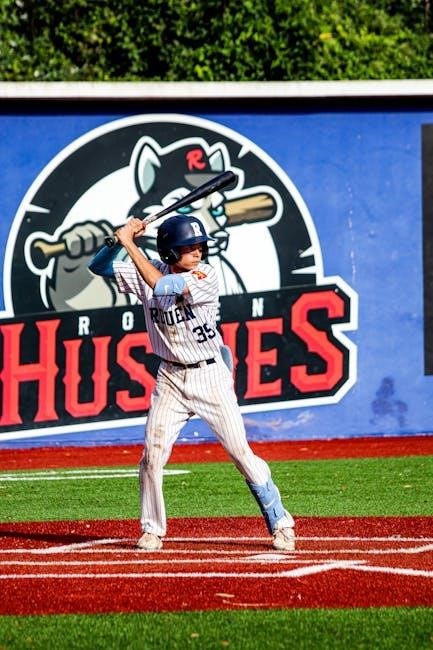
Always supervise the fitting process and encourage your child to communicate any discomfort. Regularly inspect the helmet for damage and replace it if necessary, even if it still appears to fit.
Adult Baseball Helmet Sizing
Adult baseball helmet sizing generally follows a standardized approach, but variations exist between brands. Most manufacturers utilize a sizing range based on head circumference, typically measured in inches or centimeters. Common adult sizes range from approximately 6 7/8 to 7 5/8 inches, though larger and smaller sizes are available.
Accurate measurement is paramount. Unlike youth sizing, adult head growth is less of a concern, allowing for a more precise, one-time fit. However, individual head shapes can influence the optimal size, so relying solely on circumference isn’t always sufficient.
Consider the helmet’s intended use. BBCOR (Bat-Ball Coefficient of Restitution) certified helmets, often used in high school and college play, may have slightly different fit characteristics than those designed for recreational leagues.
Always consult the specific brand’s sizing chart (Rawlings, Easton, Mizuno – see below) for the most accurate guidance. A snug, secure fit is essential for both comfort and protection.
Adult Sizing Variations: Different Brands
While a general sizing range exists for adult baseball helmets, significant variations occur between manufacturers like Rawlings, Easton, and Mizuno. These differences stem from unique helmet shell designs, internal padding systems, and sizing chart methodologies.
Rawlings often features a more traditional fit, potentially running slightly smaller compared to other brands; Easton helmets are known for their advanced cushioning and may offer a more accommodating fit for various head shapes. Mizuno tends to prioritize a streamlined profile, which can influence sizing preferences.
It’s crucial to avoid assuming a consistent size across brands. A size 7 in a Rawlings helmet might not equate to a size 7 in an Easton or Mizuno helmet. Always refer to each brand’s specific sizing chart, readily available on their websites (like Rawlings.com).
Prioritize trying on helmets whenever possible to assess the fit firsthand. Consider the helmet’s overall feel and ensure it doesn’t shift during movement.
Helmet Fit Check: Ensuring a Secure Fit
After initially selecting a helmet based on head measurements, a thorough fit check is paramount. Don’t rely solely on the size sticker; individual head shapes vary significantly. A properly fitted helmet shouldn’t move excessively during activity, yet remain comfortable without causing pressure points.
Begin by placing the helmet squarely on your head, ensuring the forehead is adequately covered. The brow pad should sit just above your eyebrows. Secure the chinstrap, adjusting it until snug but not constricting – you should be able to fit one or two fingers between the strap and your chin.
Perform the “Wiggle Test” – vigorously shake your head from side to side and up and down. The helmet should remain firmly in place, minimizing movement. If it shifts noticeably, re-evaluate the size or adjust the internal padding.
Finally, check for any discomfort or pressure points. A well-fitted helmet should feel secure and comfortable throughout the entire head.
The “Wiggle Test” and Other Fit Checks
The “Wiggle Test” is a fundamental assessment of helmet security. With the helmet fastened and the chinstrap adjusted, vigorously shake your head in multiple directions – side-to-side, front-to-back, and tilting. Minimal movement indicates a good fit; excessive shifting signals a need for adjustment or a different size.
Beyond the wiggle test, assess the helmet’s coverage. Ensure the forehead is adequately protected, with the brow pad positioned comfortably above the eyebrows. Check for gaps between the helmet and the head, particularly at the temples and the back of the skull.
Another crucial check involves simulating game conditions. Have the wearer swing a bat or mimic fielding motions. This helps identify any potential interference or discomfort that might not be apparent during static testing.
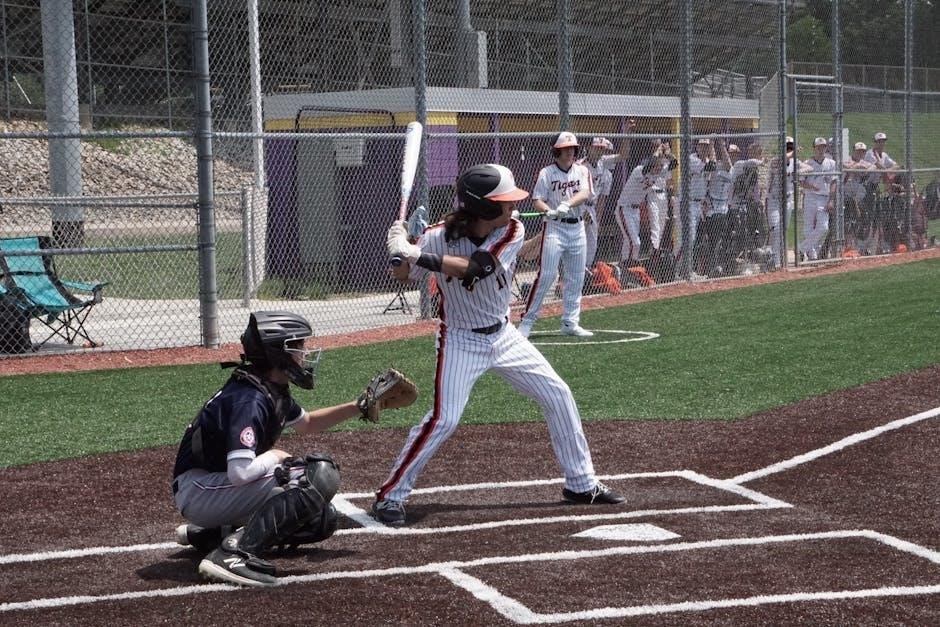
Finally, ask the wearer for feedback. A comfortable and secure fit is paramount, and their input is invaluable in ensuring optimal protection.
Adjusting Your Baseball Helmet for Optimal Comfort
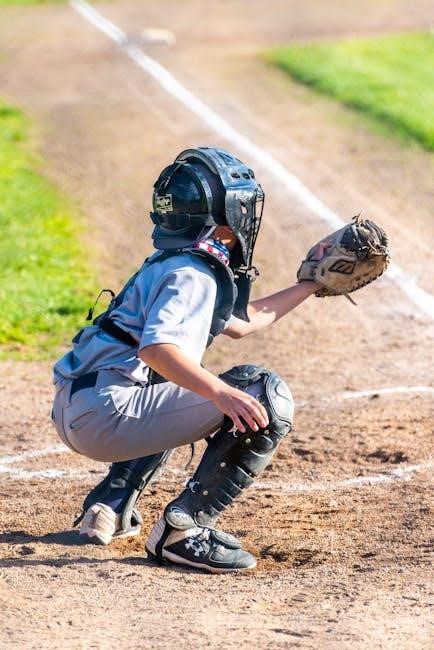
Most baseball helmets feature adjustable components designed to fine-tune the fit. Begin with the chinstrap, ensuring it’s snug but not constricting – you should be able to comfortably fit one or two fingers between the strap and the chin.
Many helmets also include internal padding systems. These pads, often made of foam, can be added or removed to customize the fit around the head. Focus on areas where the helmet feels loose or creates pressure points. Experiment with different pad configurations to achieve a balanced and comfortable feel.
Some higher-end models offer adjustable sizing mechanisms, such as a dial or ratchet system at the back of the helmet. These allow for precise adjustments to the circumference, ensuring a secure and personalized fit.
Regularly check and readjust the helmet as needed, especially during the season, as slight changes in head size or hair volume can affect the fit.
Using Padding and Adjustments
Helmet padding plays a vital role in both comfort and protection, absorbing impact and ensuring a secure fit. Most helmets come with pre-installed padding, but it’s crucial to understand how to utilize it effectively. Removable pads allow for customization based on head shape and size.
Identify pressure points – areas where the helmet feels too tight or causes discomfort. Replace the padding in these areas with thinner options or remove it altogether. Conversely, if the helmet feels loose, add thicker pads to fill the gaps.
Adjustable chinstraps are essential for maintaining a secure fit during play. Ensure the strap is snug enough to prevent the helmet from shifting but not so tight that it restricts breathing or causes discomfort.
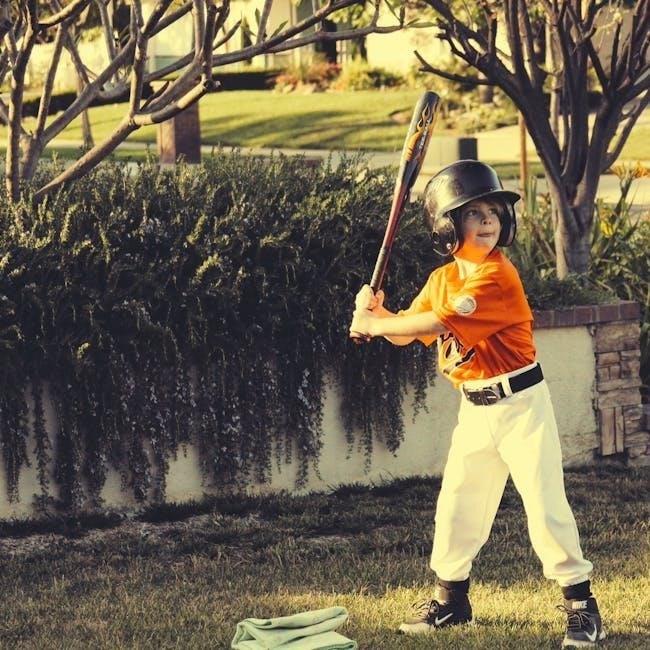
Experiment with different pad combinations and chinstrap adjustments until you achieve a balanced and comfortable fit. A properly padded and adjusted helmet significantly enhances safety and performance.
Common Baseball Helmet Fit Mistakes to Avoid
Incorrect helmet fit is surprisingly common, often stemming from assumptions about size or a rushed fitting process. Over-tightening is a frequent error, restricting blood flow and causing discomfort, potentially hindering focus. Conversely, under-tightening allows excessive movement, compromising protection during impacts.
Incorrect positioning is another critical mistake. The helmet should sit level on the head, covering the forehead adequately. Tilting, either forward or backward, reduces protective coverage and can impair vision.
Relying solely on hat size is unreliable, as head shapes vary. Always measure head circumference for accurate sizing. Ignoring padding adjustments prevents achieving a truly customized fit.
Assuming a “one-size-fits-all” approach is dangerous; each player requires a helmet tailored to their individual head size and shape. Prioritize a proper fit over aesthetics or brand preference for optimal safety.
Over-Tightening, Under-Tightening, and Incorrect Positioning
Over-tightening a baseball helmet restricts circulation, causing discomfort and potential headaches, ultimately distracting the player. This can lead to reduced reaction time and impaired performance. Under-tightening is equally problematic, allowing excessive movement during impacts, significantly diminishing the helmet’s protective capabilities.
Incorrect positioning compromises safety dramatically. A helmet positioned too far back exposes the forehead, a vulnerable area. Conversely, a helmet pulled too far forward obstructs vision, hindering the player’s ability to track the ball and react effectively;
A level fit is essential; the helmet should encircle the head evenly, with the brim approximately one inch above the eyebrows. Avoid tilting, as this creates uneven pressure points and reduces the helmet’s ability to absorb impact forces correctly. Regular fit checks are vital, especially for growing players.