
Manual Bottle Fillers: A Comprehensive Overview (02/15/2026)
Manual bottle filling offers a low-cost entry point for startups, capable of producing hundreds of bottles daily, though scalability requires substantial investment.
Manual bottle filling represents a foundational method in the liquid packaging industry, particularly appealing for businesses initiating production or handling specialized, low-volume products. It allows for a relatively modest initial investment – starting around a few hundred dollars – enabling production of several hundred bottles per day. However, it’s crucial to acknowledge that scaling up to meet higher demands necessitates significantly larger capital expenditures.
While no single filling technology universally excels across all product types, manual fillers provide a flexible starting point. The choice between manual, semi-automatic, or fully automated systems hinges on production capacity and budgetary constraints, with automated options demanding substantial space and financial commitment.
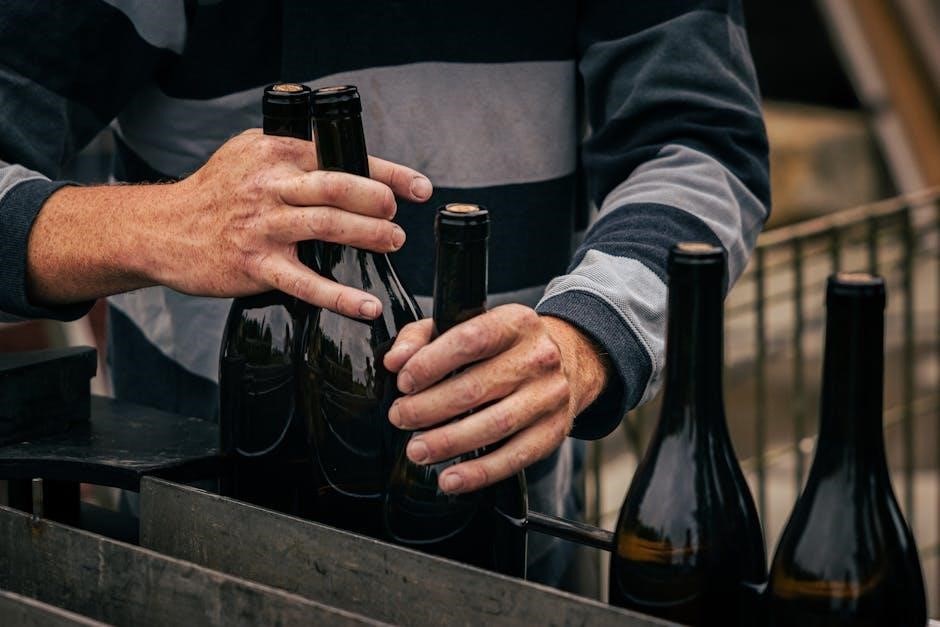
What is a Manual Bottle Filler?
A manual bottle filler is a piece of equipment designed to dispense liquids into containers without relying on automated systems. These fillers require direct human operation, typically involving levers, pumps, or gravity-fed mechanisms to control the flow of product. They are characterized by their simplicity and lower upfront cost compared to semi-automatic or fully automated alternatives.
Unlike their automated counterparts, manual fillers lack sophisticated sensors and programmable logic controllers. They are ideal for smaller operations where high-speed, precise filling isn’t paramount, offering a practical solution for businesses prioritizing affordability and flexibility.
The History and Evolution of Bottle Filling
Historically, bottle filling was entirely a manual process, relying on human skill and simple pouring techniques. As production demands increased, the need for more efficient methods emerged. Early iterations involved basic spouts and funnels, gradually evolving into gravity-fed systems offering slightly improved control.
The 20th century witnessed the introduction of semi-automatic and fully automated fillers, but manual options persisted, particularly for small-scale producers and specialty products. Today, manual fillers represent a foundational technology, offering an accessible entry point for startups before investing in more complex, expensive automated systems.

Types of Manual Bottle Fillers
Manual bottle fillers encompass gravity, piston, peristaltic pump, and spout/bung designs, each suited for different liquid viscosities and production needs.
Gravity Feed Bottle Fillers
Gravity feed bottle fillers represent a simple and cost-effective solution for filling liquids, particularly those with low viscosity. These systems rely on the force of gravity to move the liquid from a reservoir into the bottles. Typically, operators manually position bottles under filling nozzles, initiating the flow by opening a valve.
While straightforward, gravity fillers require careful operator control to ensure consistent fill levels. They are well-suited for small-scale operations and startups due to their minimal initial investment. However, achieving high accuracy and handling viscous liquids can be challenging with this method, potentially leading to splashing or inconsistent volumes. They are a foundational approach to manual filling.
Piston-Type Manual Fillers
Piston-type manual fillers offer improved accuracy and control compared to gravity feed systems. These fillers utilize a piston mechanism to draw a precise volume of liquid and dispense it into bottles. Operators typically actuate the piston manually, often with a hand lever or foot pedal, providing greater control over the filling process.
This type of filler is particularly effective for handling a wider range of liquid viscosities, including thicker substances where gravity alone is insufficient. While requiring a slightly higher initial investment than gravity fillers, piston-type systems deliver more consistent fill weights and reduce product waste, making them suitable for specialty products.
Peristaltic Pump Manual Fillers
Peristaltic pump manual fillers are ideal for sensitive liquids or those requiring strict contamination control. These systems utilize rollers to compress a flexible tube, creating a pumping action that moves the liquid without direct contact with the filler components. This design minimizes the risk of cross-contamination and makes them suitable for pharmaceutical or food-grade applications.
While generally slower than piston fillers, peristaltic pumps excel at handling shear-sensitive products that could be damaged by more aggressive pumping methods. They offer precise volume control and are relatively easy to clean, contributing to operational efficiency and product integrity.
Spout & Bung Fillers for Viscous Liquids
Spout and bung fillers are specifically designed for handling high-viscosity liquids like oils, syrups, or thick creams. These manual fillers utilize a specialized spout and bung system to create a seal within the bottle opening during filling, preventing drips and spills common with thinner fluids. The bung expands to fit the bottle’s neck, ensuring a secure and accurate fill.
These systems are often preferred when dealing with products where minimizing waste and maintaining cleanliness are paramount. While potentially slower than other methods, they offer a reliable solution for accurately dispensing challenging liquids, particularly in smaller-scale operations.

Applications of Manual Bottle Fillers
Manual bottle fillers excel in small-scale production, startups, and specialty product runs, including wineries and breweries needing small-batch capabilities.
Small-Scale Production & Startups
For emerging businesses and small-scale operations, manual bottle fillers present an incredibly accessible and cost-effective solution. Initial investments can be remarkably low – starting around a few hundred dollars – allowing entrepreneurs to begin production without significant capital expenditure. This affordability is particularly attractive when validating product concepts or catering to niche markets.

While output is initially limited to a few hundred bottles per day, manual filling provides a crucial stepping stone. It enables startups to establish a presence and fulfill early orders before committing to the substantial costs associated with automated systems. This phased approach minimizes financial risk and allows for iterative improvements based on real-world demand and feedback.
Filling Low-Volume or Specialty Products
Manual bottle fillers excel in scenarios demanding flexibility and precision for low-volume or highly specialized products. Unlike automated systems optimized for high-speed, uniform fills, manual operation allows for careful control, crucial when dealing with expensive, sensitive, or uniquely formulated liquids. This is particularly relevant for businesses producing artisanal goods, limited-edition batches, or custom blends.
The adaptability of manual fillers also shines when frequent product changes are necessary. Avoiding the complex reprogramming and changeover procedures of automated lines, manual systems enable quick transitions between different formulations and bottle types, making them ideal for diverse product portfolios.
Use in Wineries and Breweries (Small Batch)
Manual bottle fillers are a cornerstone for small-batch wineries and breweries, offering a cost-effective solution before significant capital investment in fully automated systems. These operations often prioritize craftsmanship and quality over sheer volume, making manual control advantageous. As production capacities grow, wineries can initially employ straightforward, manually operated machines, gradually scaling up to semi-automatic options to enhance efficiency.
This phased approach allows businesses to manage equipment budgets effectively while meeting increasing demand. The flexibility of manual fillers accommodates diverse bottle sizes and shapes common in the beverage industry, supporting a range of product offerings.

Advantages and Disadvantages
Manual filling excels in cost-effectiveness, but faces limitations in speed and volume compared to automated systems, impacting overall production capacity and efficiency.
Cost-Effectiveness of Manual Filling
Manual bottle fillers represent a significantly lower initial investment compared to semi-automatic or fully automated systems. Startups and small-scale producers can begin operations with a system costing just a few hundred dollars, enabling production of several hundred bottles per day. This accessibility makes manual filling an attractive option for businesses with limited capital.
However, it’s crucial to acknowledge that increased production demands will necessitate larger investments in more sophisticated equipment to achieve higher speeds, maintain cleanliness standards, and ensure consistent fill levels. While cost-effective initially, scaling up with manual methods can become less economical over time.
Limitations in Speed and Volume
Manual bottle filling inherently limits production speed and volume. While capable of producing a few hundred bottles daily, this output pales in comparison to the capabilities of automated systems. As demand grows, manual methods quickly become a bottleneck, hindering scalability and potentially impacting order fulfillment times.
The labor-intensive nature of manual filling also restricts the number of bottles that can be processed within a given timeframe. Businesses anticipating significant growth or requiring high-volume production will inevitably encounter limitations with manual fillers, necessitating an upgrade to more efficient machinery.
Accuracy and Consistency Considerations
Achieving consistent fill levels with manual bottle fillers presents a significant challenge. Unlike automated systems equipped with precise sensors and programmable logic controllers, manual operation relies heavily on operator skill and judgment. This introduces the potential for variations in fill volume, leading to inconsistencies between bottles and potentially impacting product quality or customer satisfaction.
While skilled operators can minimize these discrepancies, maintaining absolute accuracy across large production runs is difficult. For products requiring precise measurements, or those with strict regulatory requirements, manual filling may not be the ideal solution.

Choosing the Right Manual Bottle Filler
Selecting a manual filler demands careful consideration of liquid viscosity, bottle dimensions, and material compatibility to ensure optimal performance and prevent issues.
Factors to Consider: Liquid Viscosity
Liquid viscosity is a critical factor when selecting a manual bottle filler. Lower viscosity liquids generally work well with gravity feed or peristaltic pump fillers, offering simpler operation and consistent results. However, higher viscosity products – like oils, syrups, or thick creams – necessitate specialized equipment.
Spout and bung fillers are specifically designed for these viscous liquids, ensuring accurate and manageable dispensing. Attempting to fill high-viscosity substances with inappropriate fillers can lead to inconsistent fill volumes, slower processing times, and potential equipment damage. Understanding your product’s viscosity is paramount to choosing a filler that delivers both efficiency and accuracy, avoiding costly errors and maximizing output.
Bottle Size and Shape Compatibility
Manual bottle fillers must accommodate a range of bottle sizes and shapes to provide operational flexibility. Consider whether your production requires filling only one standard bottle or a variety of containers. Adjustable filling nozzles and change parts are essential for versatility, minimizing downtime when switching between different bottle types.
Fillers with limited adjustment capabilities may struggle with unusually shaped bottles or require significant manual intervention. Ensuring compatibility prevents spills, inaccurate fills, and potential damage to both the bottles and the filling equipment. Prioritize fillers designed to handle your current and anticipated bottle specifications for long-term efficiency.
Material Compatibility (Liquid & Filler)
Ensuring compatibility between the liquid being filled and the filler’s materials is crucial for preventing corrosion, contamination, and equipment failure. Aggressive chemicals or abrasive liquids necessitate fillers constructed from resistant materials like stainless steel or specific polymers.
Consider the potential for reactions between the liquid and seals, hoses, or other filler components. Incompatible materials can leach into the product, affecting its quality and safety; Thoroughly research material specifications and consult with filler manufacturers to confirm suitability for your specific application, safeguarding both product integrity and equipment longevity.

Maintenance and Cleaning
Regular cleaning is vital for manual bottle fillers to prevent contamination and ensure longevity; promptly address issues to maintain optimal performance.
Regular Cleaning Procedures
Consistent cleaning is paramount for manual bottle fillers, safeguarding product integrity and extending equipment life. After each use, disassemble components that contact the liquid – nozzles, tubes, and hoppers – for thorough washing. Utilize hot, soapy water, and a soft brush to remove residue, ensuring all surfaces are reached.
Sanitize with an appropriate food-grade sanitizer, following manufacturer’s instructions carefully. Rinse thoroughly to eliminate any chemical traces. Allow parts to air dry completely before reassembly. Inspect O-rings and seals regularly for wear and tear, replacing them as needed. A detailed cleaning log can help track maintenance and ensure consistent procedures are followed, preventing potential issues and maintaining optimal filler performance.
Troubleshooting Common Issues
Addressing problems promptly maintains productivity with manual bottle fillers. Inconsistent fill levels often stem from clogged nozzles or airlocks within the tubing; clear these obstructions immediately. Leaks typically indicate worn O-rings or loose connections – tighten fittings or replace seals.
If the filler operates slowly, check for viscosity changes in the liquid or obstructions in the feed line. For piston-type fillers, ensure the piston moves freely and the cylinder isn’t damaged. Regularly inspect all components for wear and tear. Maintaining a log of issues and solutions aids in quick diagnosis and prevents recurring problems, maximizing uptime.
Extending the Lifespan of Your Filler
Proactive maintenance is crucial for longevity. After each use, thoroughly clean all parts that contact the liquid to prevent corrosion and buildup. Store the filler in a dry, clean environment, protected from extreme temperatures. Regularly lubricate moving parts, like pistons and valves, with food-grade lubricant.
Inspect hoses and seals for cracks or wear, replacing them promptly. Avoid overfilling or forcing components, as this can cause damage. Investing in quality replacement parts ensures continued reliable operation. Consistent care minimizes downtime and maximizes the return on your investment in a manual bottle filler.